
The environment.
The digital twin where drone systems, autonomy and the software that commands them are developed and proven.
Not scenery. Measurements.
Real places are built from measured elevation, imagery and map data rather than modeled by hand: terrain, sea, roads, buildings and forest.
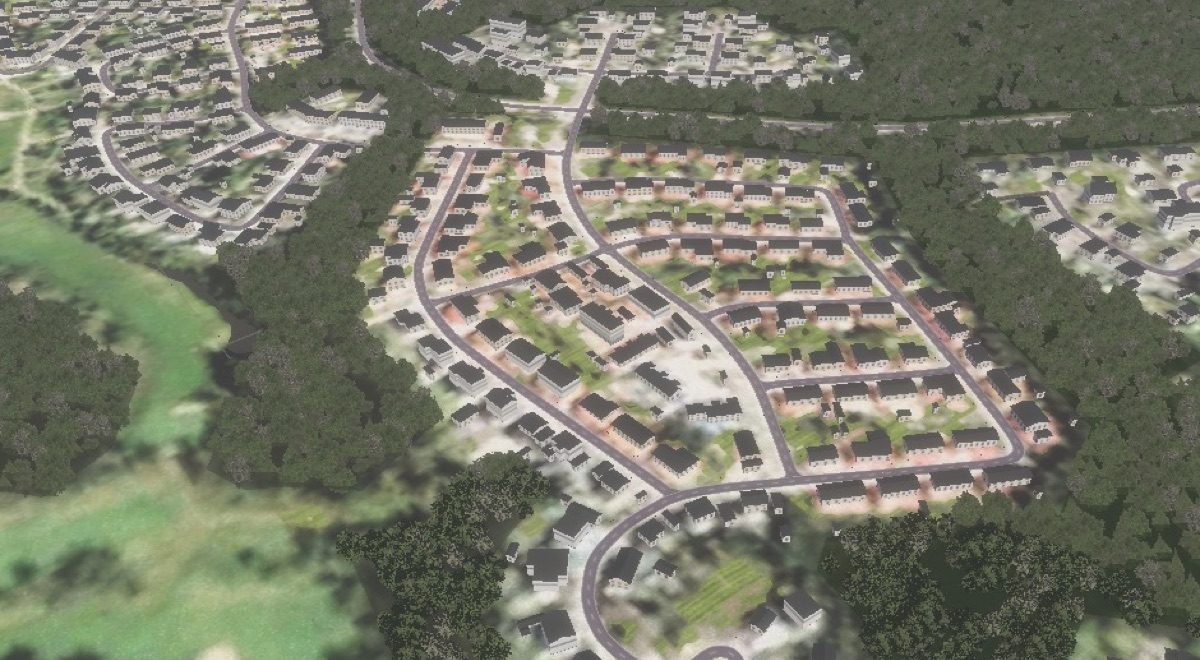
From elevation data.
From aerial imagery.
Laid out from map data, with heights and roofs measured from LiDAR survey where it exists.
A ridge hides a drone from a radar because the ridge is really there, and really that tall.
One law, not separate simulations bolted together.
Land, sea and air, surface and subsurface, in one physical world. Ships, submarines, ground vehicles and aircraft obey the same laws, and what happens to one affects the others. Aircraft fly on JSBSim, the open flight-dynamics engine used across aerospace research.
One atmosphere: the wind that raises the sea also flies the aircraft, and its density shapes every shell’s flight.
A ship floats. A vehicle that drives into a river floods and goes down.
A submarine dives. The seabed is the same terrain, continued below zero.
There are no seams, because underneath there is only one world.
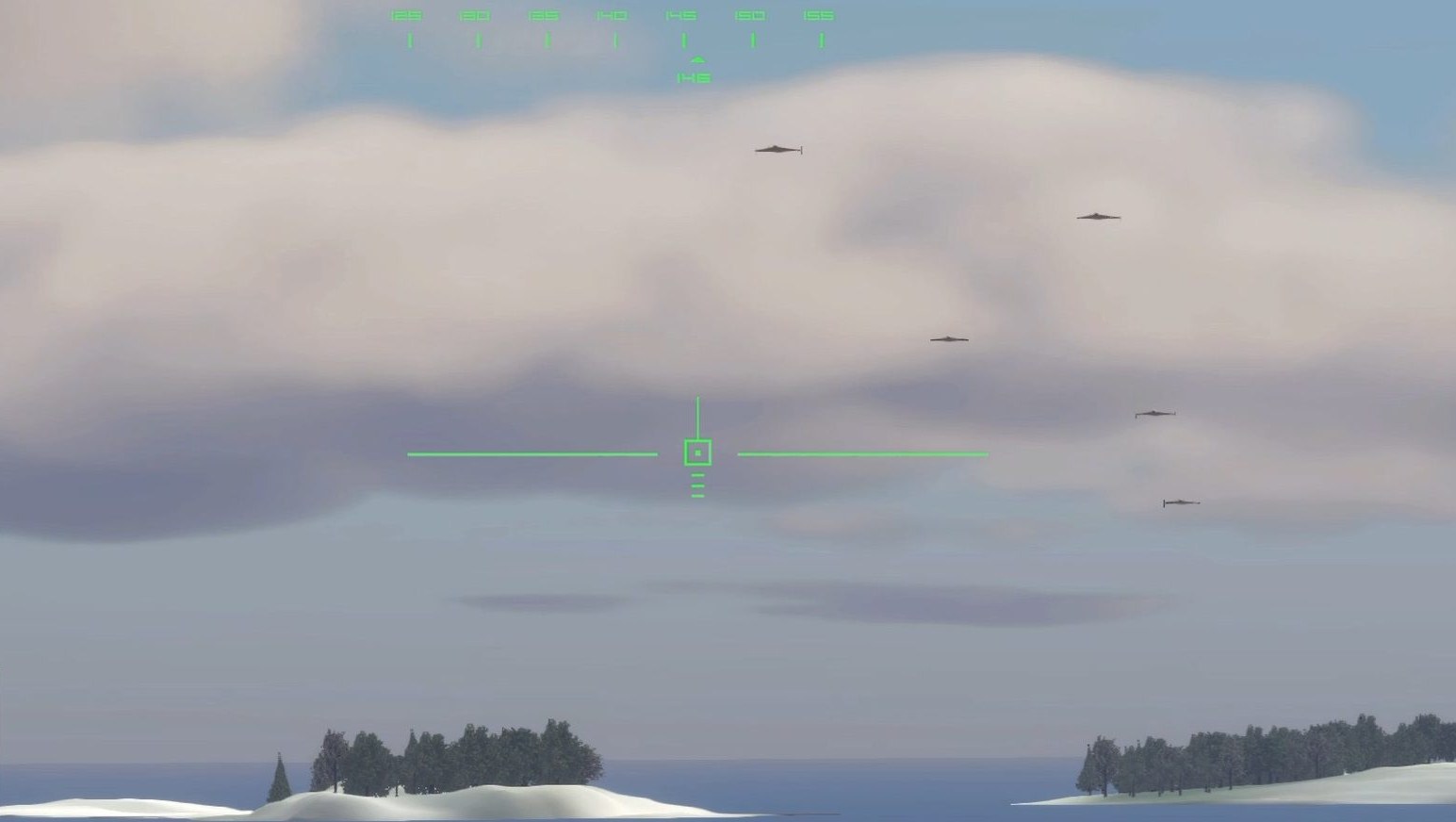
The sky is built from a weather sounding.
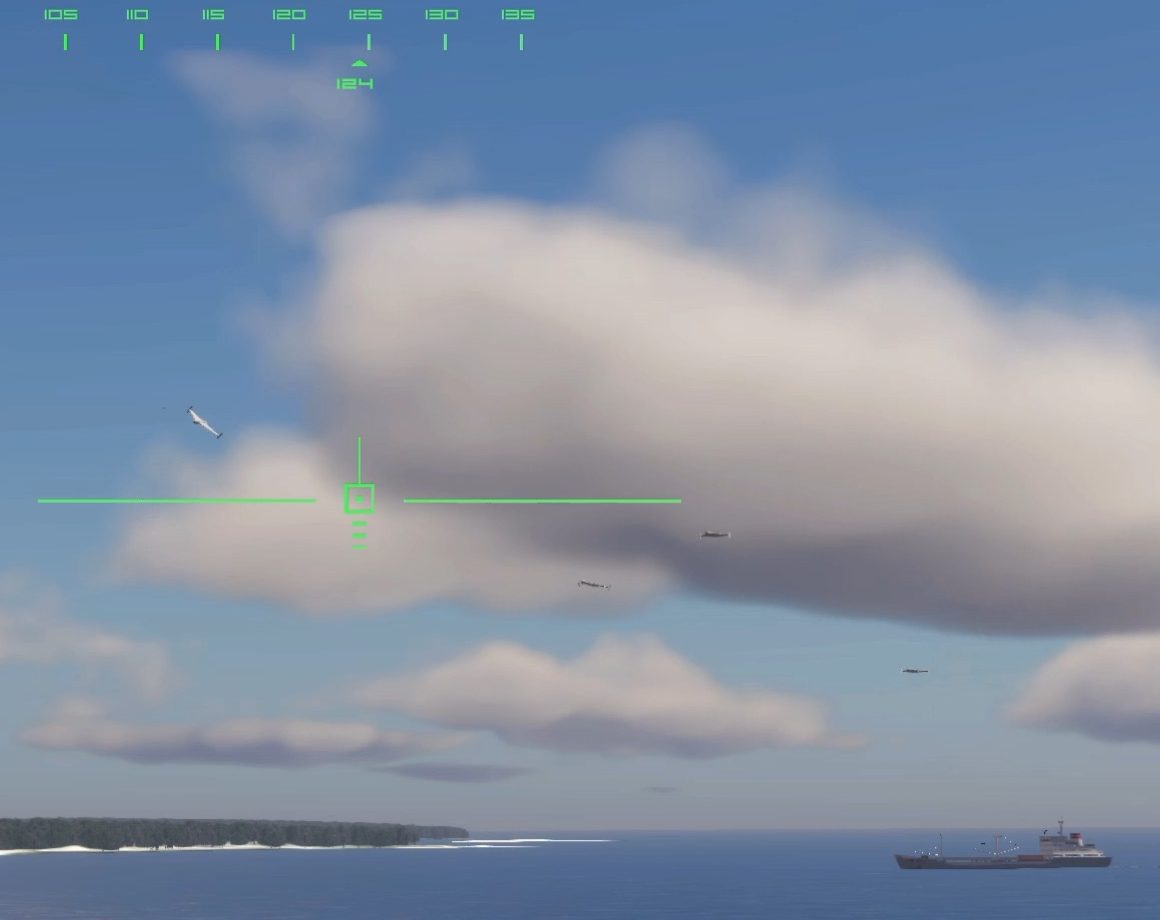
The cloud base sits where the air condenses, and everything flies through the air it describes. Weather changes what optical and infrared sensors can see, and how every platform moves.
The gunner’s optics: drones in and above a cloud deck.
Something shoots back.
An opposing force that searches, tracks and fires, and uses electronic warfare, jamming and GPS denial. It is not a target on rails.
Its radars miss a low drone for the reason real ones do: the ground return hides it. The blind zone comes from the radar’s documented beam, not from a script.
The opposing force is AI, or your own people as a red team. It plays the next threat, not the current one. With people on that side, you prove the system and train the organization that runs it.
Not everyone in a scenario is a combatant, and not everything in it is military. Civilians and the infrastructure they depend on populate the world. A mission can be to evacuate the people, or to protect the infrastructure.
Run it. Watch it at any level.
Build a scenario in a browser with your team and an AI assistant. Run it, and watch it live at any level, from a single sensor to a whole unit.
- Sensor
- Radar, optical, infrared, whatever the vehicle carries.
- Crew
- Driver, gunner, pilot and helm, each seat held by a person or an AI.
- Unit
- Platforms together, with affiliations, resources and a mission.
Click a point in a drone’s camera view and the call for fire goes up to its headquarters, which lays every gun under it that can reach.
Every edit to a scenario is recorded with who made it and when. The AI can only propose, and its suggestion lands only when a named person accepts it.
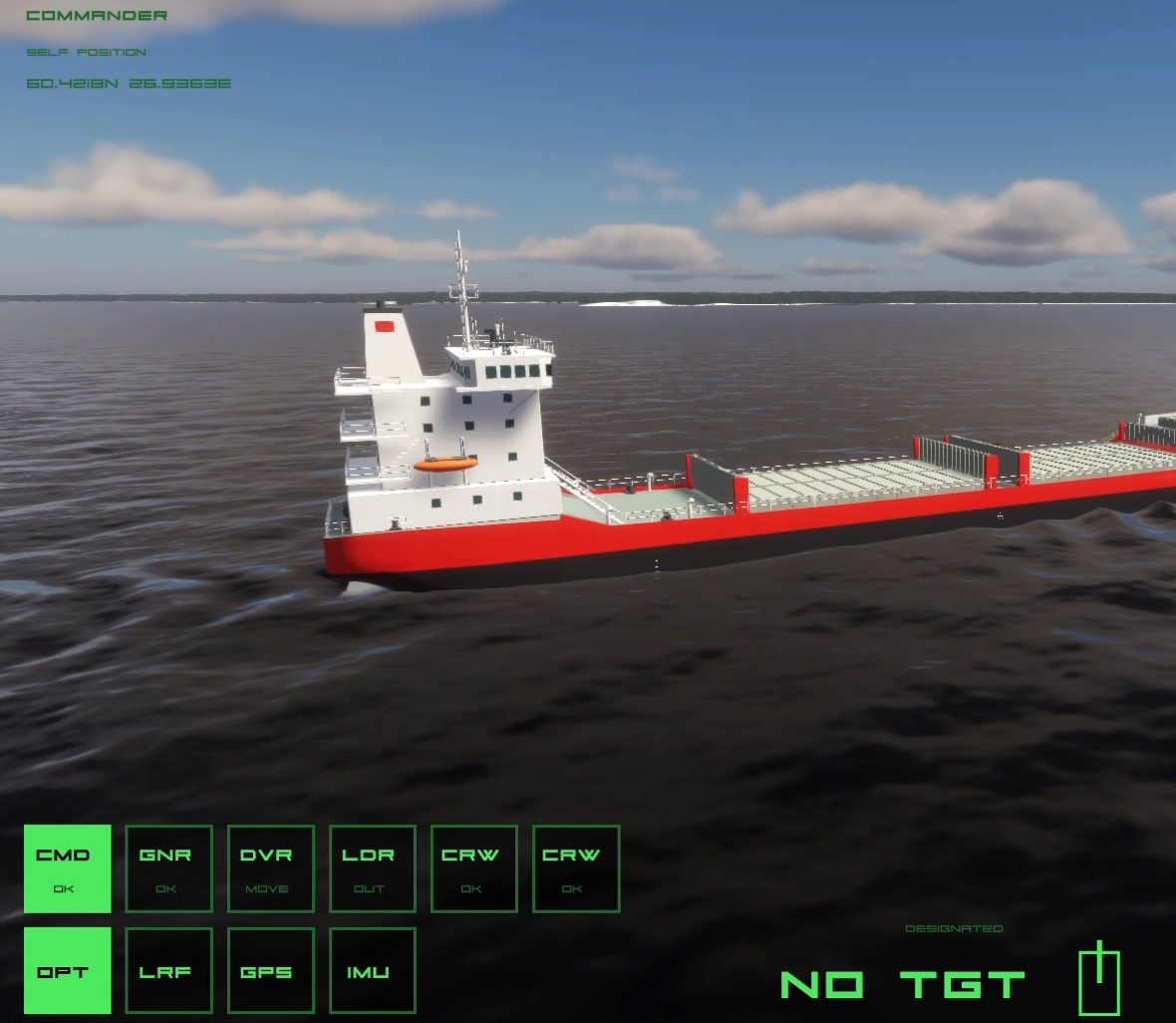
A person, our AI, or your controller.
AI agents build scenarios, connect your hardware and extend the environment to fit what you need. People stay in the loop as the decision makers.
Every driving, helm, dive and flight station takes commands from whoever ranks highest: a person, our AI, or a controller you add. Take over mid-mission. Let go, and the AI carries on.
Meet tomorrow’s threats before they arrive.
Build with us. We are building Coldrange in the open, with partners. If you build drones, autonomy, command software or the components inside them, or defend what they threaten, tell us what you need to prove.
hello@coldrange.aiColdrange is new. The experience is not. The team has more than a decade of building hardware-in-the-loop systems, software that talks to real hardware from drones to tanks, including projects for NATO and the British military. It also brings decades of international business experience, and a track record of successfully building and scaling ecosystem products.